 By Jeremy
From protecting Mahomes to protecting players — Laurent Duvernay-Tardif is back
Laurent Duvernay-Tardif, the former Kansas City Chiefs right guard and practicing physician, has returned to the NFL — not as a blocker, but as part of the Chiefs’ medical team for a short-term stint focused on sports medicine and on-field emergency care. The Super Bowl LIV champion is shadowing the club’s doctors on game days and during the week, bringing a rare dual perspective to one of the most critical parts of a modern NFL operation: player health and safety.
Why this matters to Chiefs Kingdom
On the field, the Chiefs’ margin for error in late November is razor thin. Equally thin is the gap between a routine in-game evaluation and a crisis moment where seconds count. Having a former NFL lineman who also happens to be an M.D. embedded with the medical staff isn’t a feel-good headline — it’s a competitive edge. LDT understands the language of the huddle and the urgency of the blue medical tent. That context can help streamline sideline communication, anticipate positional injury patterns, and sharpen the team’s response when chaos hits.
There’s also a trust factor. Players know Duvernay-Tardif has lived their reality: managing pain, balancing long-term health with short-term availability, and decoding the difference between “can go” and “should go.” That credibility is hard to manufacture. It can nudge athletes to speak up sooner, comply more fully, and return more safely — outcomes that matter in a playoff chase.
A cultural win for Andy Reid’s program — and Bieniemy’s offense
The Chiefs have long been a destination for innovation, from scheme to sports science. Welcoming Duvernay-Tardif in this role reinforces that the organization prizes player care as part of its competitive identity. For Eric Bienemy’s offense, which leans on timing and continuity up front, anything that keeps the line healthier — or accelerates informed decisions on who’s ready — feeds directly into Sunday execution. It’s not a roster move, but it can influence roster readiness.
It’s also a message to the locker room: the team invests in you, not just your snaps. That resonates with veterans and rookies alike, especially along the offensive line where cumulative wear-and-tear is real. From heat illness protocols in August to concussion management and hand-fighting injuries in November, an extra bridge between medical expertise and player experience is meaningful.
What Duvernay-Tardif can uniquely add
– Sideline translation: turning medical assessments into position-specific risk/return scenarios coaches can act on quickly.
– Prehab insights: practical cues for linemen on neck, back, and hand care drawn from both tape study and clinical perspective.
– Emergency readiness: rehearsed choreography for rare but high-stakes events — the kind you hope never happen, but must be prepared for.
– Community connection: a reminder that the Chiefs’ brand extends beyond football — something Kansas City embraces and recruits notice.
The fan view: larger than a box score
No, this won’t show up as a pancake block or a pressure allowed. But it fits the DNA of a franchise that blends high standards with humanity. Chiefs Kingdom cheered when Duvernay-Tardif swapped pads for scrubs in 2020; seeing him channel both callings on our sideline in 2026 feels like the natural next step — and a smart one. In a season where depth is tested weekly and the schedule only gets tighter, decisions at the intersection of medicine and football can swing outcomes. Having someone who’s lived at that intersection is an advantage.
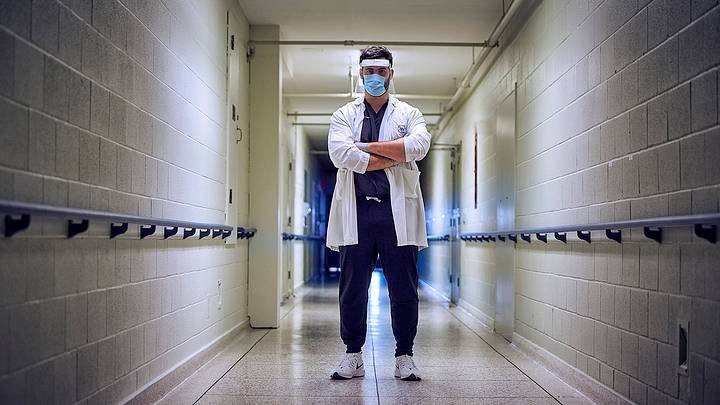
Photo suggestion: A landscape image of Laurent Duvernay-Tardif in medical gear or scrubs, reflecting his dual football-and-medicine role.
Bottom line: The Chiefs didn’t just bring back a familiar face; they added rare expertise where it counts most. Duvernay-Tardif’s presence strengthens the safety net beneath a contender — and in late November, that’s as crucial as any midseason acquisition.