
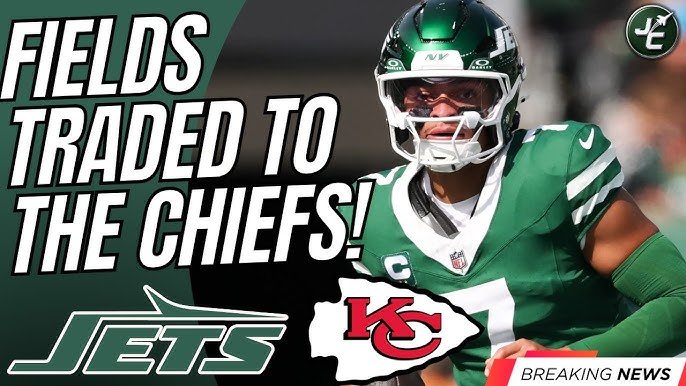
The Kansas City Chiefs made a statement this offseason by trading for Justin Fields, and it’s a move that deserves serious examination from anyone invested in this team’s future. This isn’t just about adding depth at quarterback—it’s about Andy Reid’s willingness to get creative, prepare for the unexpected, and potentially unlock new dimensions of an offense that’s dominated the AFC for years.
Let’s be clear about what prompted this move. Patrick Mahomes is the franchise’s foundation, but the Chiefs learned a painful lesson when injuries sidelined their superstar in recent seasons. When Mahomes went down, the backup situation became an absolute disaster. Nothing worked. The offense couldn’t function. The team couldn’t compete. That’s not acceptable for a franchise with championship aspirations, and Brett Veach clearly decided it was time to change that narrative.
Fields brings something different to Kansas City’s quarterback room—he’s a dual-threat talent with mobility that could fundamentally alter how Reid schemes the offense if Mahomes ever needs extended time off. Unlike previous backup options, Fields isn’t just a caretaker. He’s a developmental piece with legitimate upside, a player who could actually keep the Chiefs competitive in games where they might otherwise be forced to rely on a traditional pocket passer with limited weapons around him.
The timing of this acquisition also matters. The Chiefs didn’t have many quality veteran options available in free agency. The market for proven backup quarterbacks was thin, and Veach made the pragmatic choice to invest in someone with real potential rather than settling for mediocrity. That’s the kind of forward-thinking approach that separates contenders from pretenders.
Schematically, Fields’ athleticism opens doors that wouldn’t normally be available to Kansas City’s offense. If the Chiefs need to deploy him for a few games, Reid will have the flexibility to use designed runs, read-option plays, and mobile-friendly concepts that could genuinely surprise divisional opponents. That element of unpredictability could prove invaluable in crucial moments.
Of course, there are legitimate questions. Can Fields actually step in and perform at a high level if called upon? Will the developmental process work under Reid’s guidance? These are fair concerns. But the alternative—rolling into the season with unproven backups and hoping Mahomes stays healthy—is far riskier. The Chiefs are essentially saying they’d rather control their own destiny than leave their season to chance.
This move also signals something broader about how Veach is approaching roster construction in 2026. The secondary remains a concern, the defensive line needs reinforcements, and the wide receiver room has questions. But by addressing the quarterback position early, the front office is establishing priorities: if Mahomes goes down, the team won’t collapse. That foundation matters more than anything else.
The Fields trade won’t make the highlight reel if everything goes according to plan. Mahomes will stay healthy, Fields will rarely see the field, and Chiefs fans won’t think twice about this move come playoff time. But that’s exactly the point. The best insurance policies are the ones you never have to use. This trade is Kansas City’s way of saying they’re prepared for any scenario, and they’re not going to let injuries derail another championship run.